Behind the Lens, Beyond the Byline
By Darlene Regis
Lights, camera, shoot!
The camera never lies. And, the reporter’s notebook captures what the lens cannot.
I learned that truth lurks behind every photograph and story, in press pits and newsrooms where we brave storms and chase breaking news. Each of us hunts the next scoop in a different language: one with a pen, the other with a lens.
As a writer, I have spent much of my career alongside photographers—from my first byline as a young campus journalist to building stories and bridges between Philippine newsrooms and the international news circuit in Qatar.
Working with photographers opened another dimension of storytelling: every story begins before the shutter clicks.
That is what those behind the lens taught me—to look beyond the headline and the caption. And perhaps, in writing this, I am simply trying to put into words what they captured in images: the story beyond the frame.

Aperture
A respected father figure in Philippine media and a multi-awarded photojournalist, the late Antonio “Tonee” Despojo was simply “Tatay” to generations of journalists and photographers who knew him.
Tatay’s work made the front pages of the Philippine Daily Inquirer. A pioneer of Cebu Daily News, he served as its chief photojournalist before becoming Cebu Provincial Government’s lead photographer.
I had the privilege of working with him under the same roof. I remember his many awards on the wall, but more so the calm he carried behind the camera amid the chaos of his work.
His lens followed communities around the Tañon Strait, opening an aperture to fishermen, children, and the pulse of coastal life.
But his greatest legacy was beyond the photo credits. It lived in the photographers he mentored and the stories he captured. Tatay wasn’t simply a name the newsroom gave him—it was a title he earned, frame by frame.
Shutter
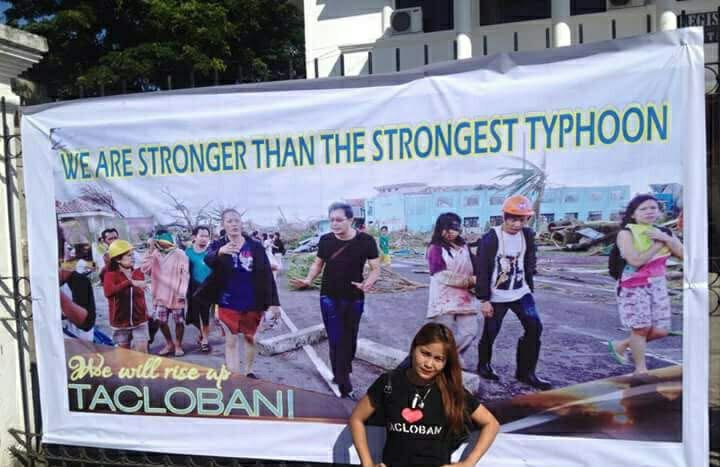
When Super Typhoon Yolanda “Haiyan” tore through my hometown, Tacloban, and my second home, Cebu, in 2013, it was Tatay and the photographers I also worked with—Lito “Tolits” Tecson and Wenceslao “Junjie” Mendoza—who carried the visual weight of that catastrophe. They walked into the wreckage with their cameras to show the world what words could not.
The photographs of the aftermath became more than newspaper images. They captured the grief, casualties, survivors, and the silence after the storm.
While others sought shelter, photographers searched for a vantage point. When danger enters the frame, they press the shutter.
A photograph can become an eyewitness to a scene. One frame can become history or the only surviving evidence that something happened. That is the strange courage of photojournalism: being there to preserve what might otherwise disappear.
Shoot
Journalism is about who sits behind the desks—the ones who pick up the phone at 2 a.m. when a fire breaks out, drop dinner mid-bite because a crime scene needs documenting, and show up breathless and half-dressed because breaking news does not wait for anyone’s convenience.
Photojournalists Carlo Suico and Choy Romano were my partners in the grind. Together, we knew the scramble behind the story — not the polished front page the reader sees over coffee.
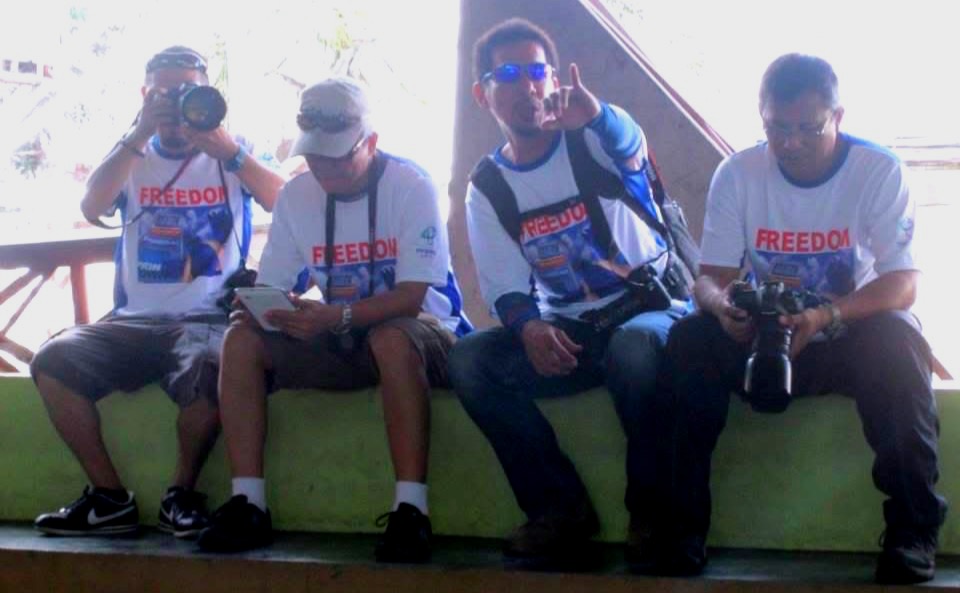
A 2017 photowalk in Iligan challenged photographers to shoot with their LCD screens covered, recreating the discipline of film photography. Choy took the top two prizes, while Carlo kept acing his photographic eye.
I also worked alongside Sam Yncierto, whose works were in Inquirer archives and whose grit I will never forget. He once collapsed from exhaustion on our coverage, giving the job more than he could spare. That is not a footnote. That is passion beyond profession.
Visual
And there was Cristanto “Soyee” Etorma, with whom I shared campus journalism years and press badges at Lakandiwa. We later worked together at Cebu Daily News, where he went on to mentor young photographers at the University of Cebu before opening his own Campo Santo Photography Studio.
Etorma co-founded PHONEography Cebu, championing mobile photography when serious photography was still widely associated with DSLRs. A multi-awarded Cebuano photographer and graphic designer, he also taught visual storytelling through workshops.
A good photographer doesn’t keep knowledge in the camera bag. He shares it and passes it on.

Coverage
Years later, my work led me to an unforgettable media coverage: interviewing Per-André Hoffmann, the “Magician of Light,” as Asian Geographic described him. The magic, he says, is in waiting for the right light, moment, and subject.
From National Geographic to Vogue, Time, Life, Newsweek, Stern, and GEO, his photographs have traveled the world.
Raised between Brazil and Norway, trained in Germany, and educated in the United States and England, Hoffmann built a career spanning decades as a National Geographic contributor and Canon Legend, with photographs featured from postage stamps to international exhibitions.
Talking to him felt like an hour-long apprenticeship, not an interview. You do not forget a conversation like that.
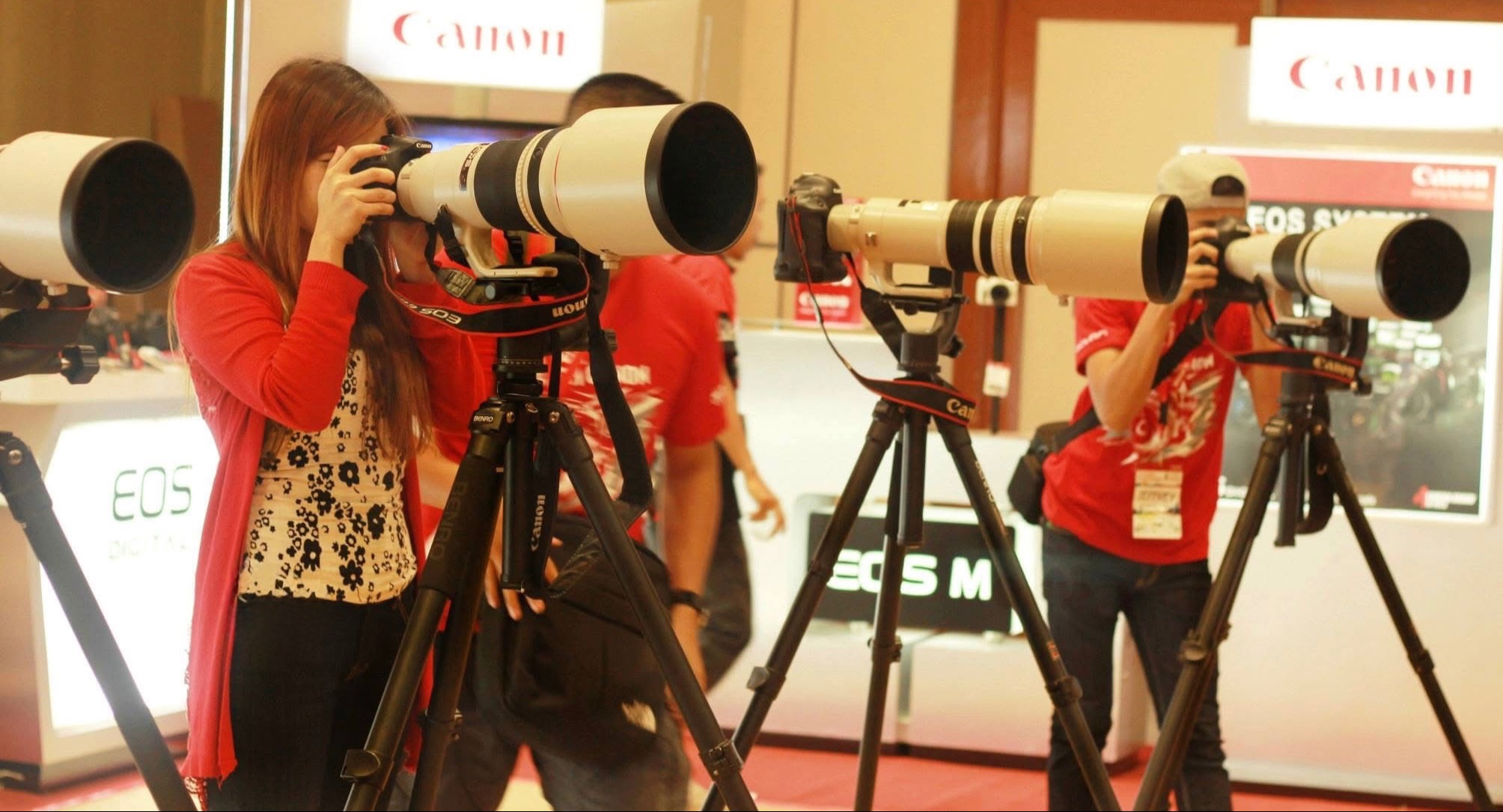
That same time, I covered the Canon Photo Marathon “Battle of the Shutterbugs,” watching photographers race against the clock under the mentorship of the Magician Hoffman himself.
Capture
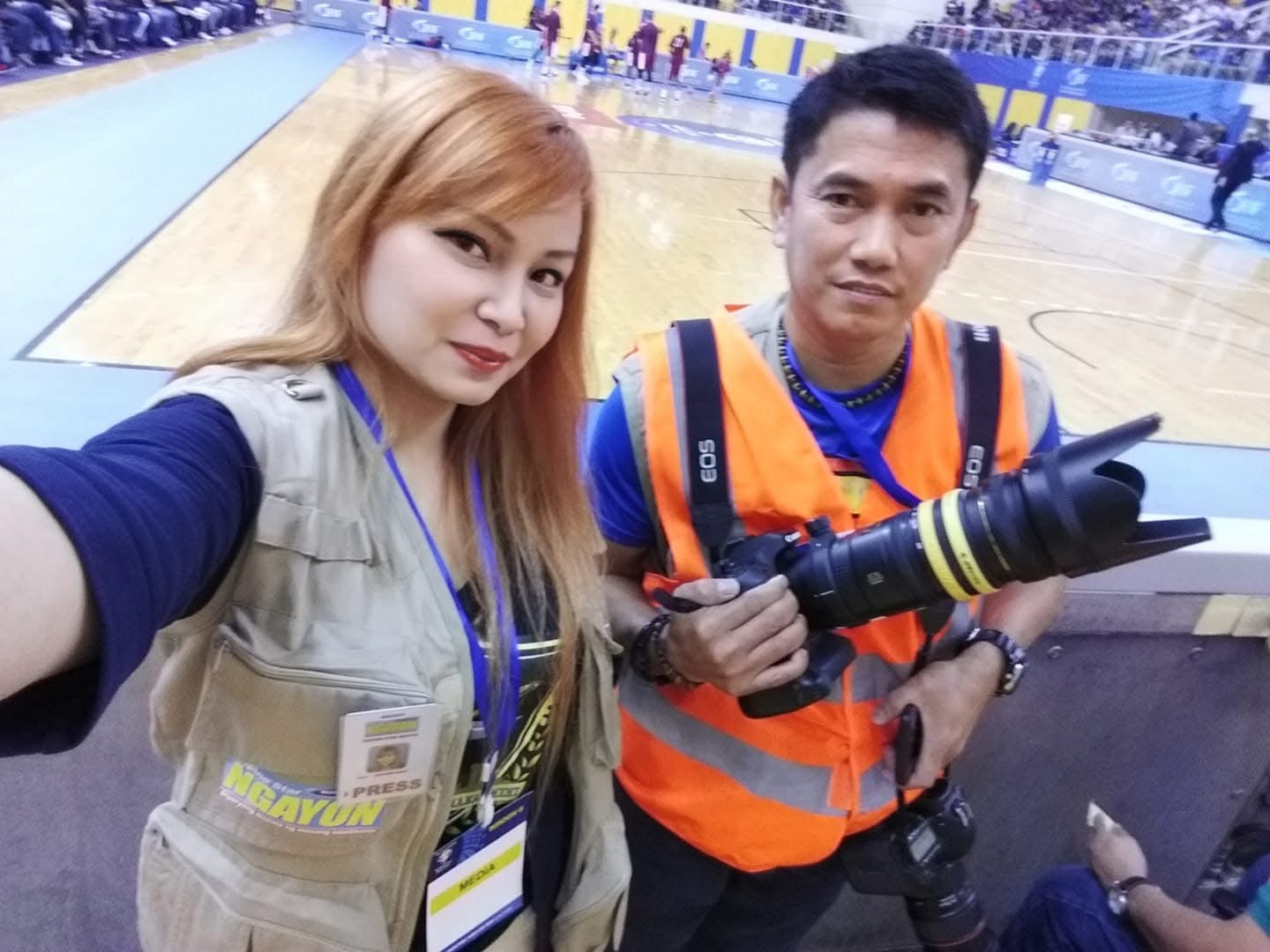
When my own path took me from Cebu to Qatar, I worked with Filipino photographers Leo Bautista at Qatar Tribune, and Ronnie Castro and Victor “Striker” Magnipes at Pilipino Star Ngayon, in The Peninsula newsroom.
Bautista, president of the Doha Pinoy Shooters Club, became a key figure in Qatar’s photography events. He helped lead Scott Kelby’s Worldwide Photo Walk in Doha for years and was involved in the first major international photography exhibition at Katara.
Castro is another prominent name in Qatar’s Filipino photography community. Magnipes was featured in Qatar Through Filipino Lenses as president of Pinoy Lente Qatar, an exhibition that showcased more than 40 photographs at Katara Village.
Their photography has never seemed confined to a studio. They capture people and places in motion—from portraits and fashion to weddings, sports, events, and landscapes.
They photograph Qatar as people who have lived it, explored it, and seen it through a Filipino lens—not the Qatar of tourist brochures or an outsider’s postcard, but the Qatar of Filipinos who live, work, and dream here.
Frame
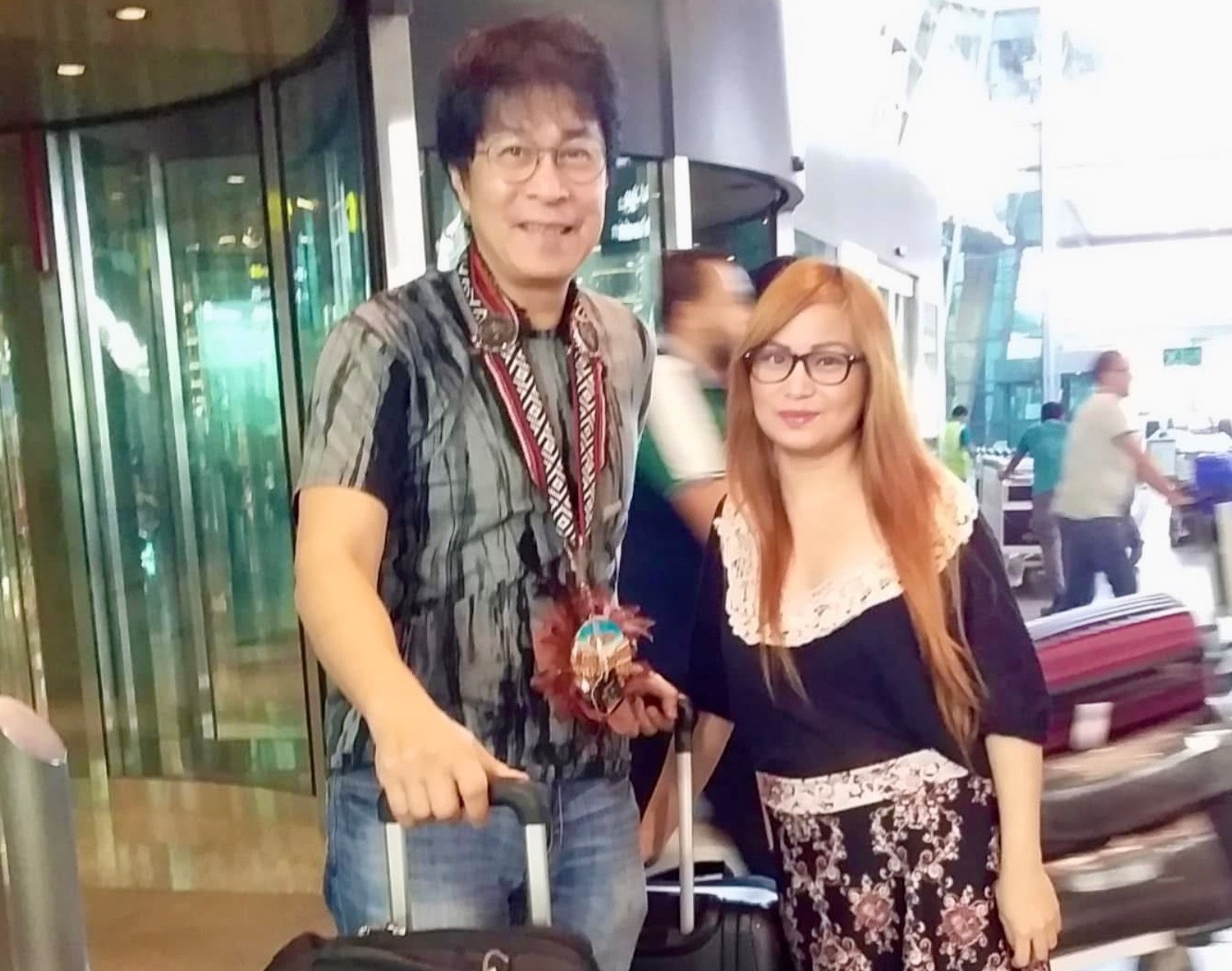
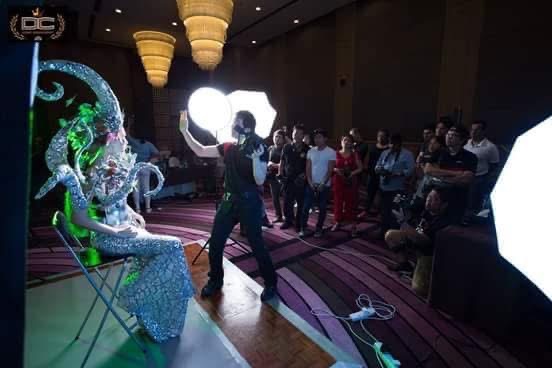
I became part of a photography workshop production in Qatar led by World Master Photographer Erich Caparas, a name that needs no introduction on the world stage. A Diamond Photographer of the Year with the Professional Photographers of America, a top awardee of the Master Photographers Association in the UK, and a former Team USA representative at the World Photographic Cup, Caparas has worked with National Geographic, the Smithsonian Institution, and Discovery Channel. He later represented Team Philippines at the World Photographic Cup.
He began photography in 1977, worked as a graphic designer and photographer in Washington and New York, and was involved in the early development of Photoshop, including testing and consultation around the introduction of layers. His workshops now turn decades of experience into lessons in shooting, lighting, post-processing, and developing a photographer’s own visual signature.
Bringing a photographer of that caliber to Doha meant building an entire creative ecosystem around him. I helped produce the workshop and worked with Filipino designers Celso Collado Dahil and the late Vhong Taasan, makeup artists Lea Abo and Lola Fernandez, international models Olga Aleshicheva, Rania Lanouarl, and Albana Popaj.
But I wasn’t just part of the production team. I became a participant, earning my own workshop certificate. It felt symbolic. The writer in me finally stepped inside the frame.
When photography becomes an orchestra, the designer sets the visual tone, the makeup artist the face, the stylist the silhouette, the model the pulse, and the producer brings it all together. The photographer frames it, and the shutter becomes the final punctuation mark.
That workshop taught me that behind every photograph is an entire creative orchestra—a collaboration frozen into a frame.
Photography
I first encountered photography as a campus editor-in-chief, never realizing the weight it would carry in my media career. Years later, I carried that same restlessness across the sea, weaving photographs into the pages of Inquirer Group - Cebu Daily News, The Desert Riders Magazine and Qatar Tribune.
Along the way, I found myself repeatedly working with photographers, and seeing the world through their lenses.
They left me a visual vocabulary: from Tatay, a camera can carry compassion; from Sam, Lito, Junjie, Carlo, and Choy, the discipline of the daily grind; from Soyee, knowledge becomes legacy when shared; from Leo, Ronnie, and Striker, photography can build community far from home; from Magician Hoffmann, light is narrative; and from World Master Photographer Erich, mastery becomes more powerful when passed on.
Perhaps that is why I have always held photographers in such high regard. They carry equipment, yes—but they also carry responsibility.
A photograph can expose injustice, preserve memory, humanize tragedy, celebrate triumph, document history, and shape public opinion.
And beyond the deadlines, dispatches and developing stories, I remember the people behind the cameras—and what they taught the writer in me.
Photography, as I have come to understand it, is the story I fail to put into words. This, at least, was my attempt to try.
Lights, camera, curtain call!
0 Comments Add a Comment?